

Picking the right shop goes beyond fixes. The best places help you learn so you can make clear decisions about repairs, estimates, and parts. A visible customer education effort shows a shop values long-term trust over quick sales.
In this guide you’ll spot a mature customer education program by looking for clear estimates, knowledge hubs, short videos, and step-by-step onboarding. These resources cut surprises and speed up approvals.
Data backs this up: training and learning initiatives raise adoption and lower support costs. Shops that invest in organized content and platform-based tutorials deliver better value, faster diagnostics, and higher success for drivers.
Expect to evaluate sites, in-bay aids, warranties, certifications, and self-serve courses. We’ll give checklists and practical questions so you can choose a shop that fits your needs.
Key Takeaways
- Look for clear estimates and short video tutorials.
- Built programs mean consistent onboarding and fewer errors.
- Organized content and platforms speed approvals.
- Data shows programs increase adoption and reduce costs.
- Use certifications and warranty clarity as trust signals.
Why Customer Education Matters When Picking an Auto Repair Shop
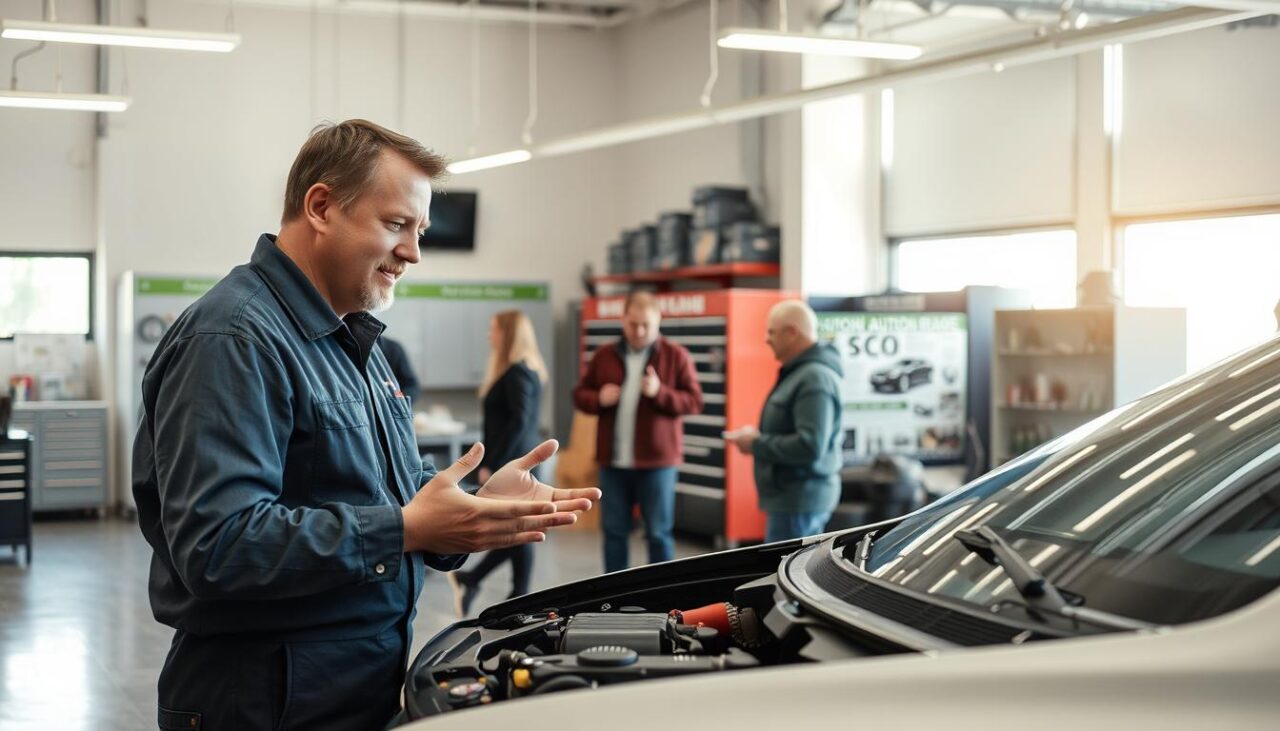
Drivers increasingly choose shops that explain diagnostics, parts, and labor in plain terms. A strong learning approach turns a confusing estimate into a clear decision.
The shift to informed decision-making in auto service
Informed owners want to understand product choices, timelines, and failure modes before approving work. Shops that offer short videos, tutorials, and quick guides make approvals faster and build trust.
How education reduces risk, costs, and uncertainty for drivers
Clear explanations cut repeat visits and surprise bills. When users can self-serve answers via content or a knowledge base, advisors spend less time on routine support.
- Lower dispute rates: people approve repairs they understand.
- Faster throughput: onboarding at drop-off clarifies fees and timelines.
- Better business outcomes: studies show well-run customer education programs raise retention and satisfaction and reduce support costs.
Customer Education Explained for Car Owners
When a shop makes learning part of the visit, decisions become easier and faster. This is more than pamphlets: it is a structured approach that helps drivers understand product choices, maintenance schedules, parts, and warranty terms before they approve work.
From “what is it?” to “how it helps you at the shop”
Think of customer education as short, clear lessons at the counter. A strong customer education program uses quick-reference checklists, short courses, and plain-language FAQs to explain estimates and timelines.
Translating onboarding, training, and support into the service bay
At drop-off, onboarding shows what will happen, how diagnostics work, and how the shop will communicate updates. Brief customer training—like reading a digital inspection—helps users interpret photos and technician notes.
- Self-serve support: articles or micro-lessons answer common questions like brake life and tire intervals.
- Ongoing learning: keep existing customers informed on seasonal needs and new model care.
- Formats that work: checklists, short courses, and simple FAQs on the shop site.
Why it matters: Proper learning and clear content reduce confusion, speed approvals, and raise satisfaction. Research shows structured programs lift adoption and cut support costs by large margins.

Proven Benefits You’ll See When a Shop Invests in Education
A repair shop that invests in clear learning tools delivers faster approvals and steadier returns. Short check-in steps, a quick overview of diagnostics and an update timeline reduce anxiety at drop-off. This cuts idle time and speeds throughput.
Faster onboarding: clear intake, diagnostics, and next steps
Simple intake forms and a short walk-through of diagnostic steps make onboarding predictable. When drivers know fees and timelines up front, approvals happen faster and fewer jobs stall.
Higher satisfaction through transparent, self-serve resources
Accessible FAQs, short tutorials, and checklists lower post-service questions. Shops that publish clear guides see approval rates rise and follow-up calls fall.
Better retention and loyalty driven by trust and consistent learning
Regular learning moments across visits—brief tips, webinars, and concise courses—build trust over time. Data shows programs link to higher retention and stronger satisfaction, and that translates into repeat business and referrals.
- Measured gains: expect higher adoption of recommended services and fewer disputes.
- Business impact: clear explanations support ethical upsells and better perceived value.
- Engagement: checklists and short tutorials keep users coming back for seasonal care.
How to Evaluate a Shop’s Education Program and Content
Look for clear signs that a shop maintains structured resources and updates them regularly.
Website signals matter first. Scan for a visible hub with a knowledge base, repair guides, and plain-language FAQs that explain diagnostics, parts choices, and warranty terms.
Video and webinars are next. Check for short walk-throughs of common services, recorded webinars, and mobile-friendly video with captions so users can learn at drop-off.

On-demand learning should include checklists, ebooks, and step-by-step explainers for seasonal maintenance and safety systems. High-quality content helps with fast approvals.
Community signals show ongoing engagement. Forums, social groups, or live Q&A with technicians indicate a program that welcomes questions and builds trust.
- Verify certifications like ASE or OEM training badges to confirm credibility.
- Assess organization: categories, search, and consistent formatting make content easy to use.
- Look for authorship and a named team responsible for updates and support.
Finally, match resources to your needs. Ensure the program covers your vehicle type, has current timestamps, and runs on a usable platform. That mix of knowledge, video, and verified credentials marks an effective customer education program.
Customer Education in Action: What Great Shops Offer
Great repair centers present findings so drivers can see the problem, the fix, and the value. That clarity starts with short, visual reports and ends with clear next steps.
Transparent estimates with “what, why, and how” explanations
Each line on an estimate should state what will be done, why diagnostics say it is needed, and how the repair will be completed. Include parts brand, labor time, and alternatives when possible.
Visual diagnostics: photos, video inspections, and annotated reports
Look for digital inspections that show photos or short video with annotations. Color coding (green/yellow/red) and brief definitions help users understand worn parts, fluid condition, or fault codes.
Clear warranty terms and service-level expectations
Warranty details must be plain: coverage period, parts vs labor, exclusions, and the claim process. Also list timelines, communication intervals, and conditions that could change the estimate.
- Team guidance: advisors explain reports and link to support content.
- Consistent templates: management discipline ensures every customer gets the same clarity.
- Visual proof + explanation: raises perceived value and lowers disputes at pickup.
Questions to Ask Before You Book
A simple pre-booking checklist helps you confirm a shop’s resources, onboarding, and technician credentials. Use these questions to judge whether a place will keep you informed and make approvals straightforward.
Do you have a knowledge base or learning resources for customers?
Ask for access to guides, FAQs, and sample inspection reports before you approve work.
- Do you offer a knowledge base with step-by-step articles?
- Can I review a sample inspection report or short video that explains findings?
- How often is content updated in your customer education program?
How do you onboard new customers and communicate updates?
Confirm the intake process and how the shop sends progress notes.
- Do you explain diagnostics, timelines, and approval steps up front?
- Will I get texts or photos, scheduled calls, or access to a portal?
- Are checklists or written outlines provided at drop-off?
What certifications, training, or partnerships validate your expertise?
Ask for proof of technician credentials and program ownership.
- Which ASE or OEM certifications do your techs hold?
- Who maintains your education program and training program cadence?
- Do you have resources for hybrids/EVs or fleet needs?
Tools and Platforms That Power Customer Training at Shops
A strong tech stack makes training simple: a central hub, mobile lessons, and recorded webinars. These platforms turn routine explanations into on-demand guides that users can access before and after service.
LMS-style hubs for guides, courses, and short videos
Use a learning management system as the backbone. An LMS hosts guides, bite-sized courses, and short videos so users revisit content at the moment of need.
Good systems offer gamification, mobile access, and tracking. Shops can link modules on diagnostics, maintenance intervals, and warranty basics to make a published training program repeatable.
Video conferencing and recorded webinars for seasonal tips
Live webinars (Zoom, GoToWebinar) let techs run Q&A sessions on winter prep or EV charging. Recordings are added to the hub for ongoing access.
Tracking shows which videos people watch. That insight guides new tutorials and improves engagement and clarity.
- Mobile learning: view inspection walk-throughs on the go.
- Integrations: connect the LMS to shop management and messaging for timely content with estimates and invoices.
- Access: provide simple, password-free links or portal access at estimate delivery and post-service.
Result: a structured training program reduces surprises, speeds approvals, and smooths shop workflow—backed by case studies that show strong LMS-driven gains.
Customer Education: Your Shortcut to Confidence, Value, and Support
A clear learning path at a repair shop turns doubt into steady confidence. When a shop shares short lessons and visual proof, drivers feel informed and trust the repair plan.
Transparent teaching links directly to higher customer satisfaction. Shops that publish brief guides, micro-lessons, and clear estimates report fewer follow-up questions and higher approval rates.
Keep engagement light and regular. Seasonal reminders, short courses, and simple how-to videos keep users involved without overwhelming them.
- Scale easily: a repeatable program means every new visitor benefits and the whole base improves.
- Brand lift: informed customers recommend shops that teach instead of pushing sales.
- Less support load: self-serve content reduces one-on-one help while improving successful outcomes.
Look for an organized hub, current videos, and clear, visual estimates. Those signs show a shop invests in learning and delivers better perceived value with ethical sales.
Conclusion
Choose a repair shop that teaches, not just fixes, and you’ll avoid surprises and slowdowns. Prioritize a place with a visible customer education program that includes a knowledge hub, clear onboarding, visual inspections, and plain warranty terms.
Before you book, verify ASE or OEM training, ask who updates the content, and confirm how users access guides and video. Favor shops that share checklists and a platform you can use anytime.
Why it matters: education-forward shops drive higher customer satisfaction, fewer surprises, and smoother service. When support needs arise, robust self-serve content plus reachable advisors speeds resolution.
Use the questions and signals in this guide to evaluate local options and book with confidence. Shops that invest in learning build stronger brand and a happier base.