

This story traces how local retail changes affect everyday mobility and dignity. A longtime supermarket in Heights Plaza in Harrison Township has begun clearance after 23 years, and general manager George Sears has not set a final closing date. Shelves emptied quickly, leaving non-drivers—especially seniors—with grocery trips that can stretch into hours.
Nearby options are far: a Walmart is roughly a 45-minute walk, while Giant Eagle is about a 1-hour-15-minute walk across the river. We contrast that with small-town resilience at Charlie Johns Store in Speculator, New York, run by Jonathan and Lynn Lane, which has been open almost every day since 1939.
We also note solutions emerging in Nashville: The Store, a nonprofit grocer, is expanding to TriStar Centennial Medical Center, mobilizing 4,000+ volunteers, raising $218,000 at a recent benefit, and working toward a $1.8 million remaining capital goal. This introduction sets the scene for a customer spotlight that links neighborhood change, practical hurdles, and active responses.
Key Takeaways
- Local closures can turn short errands into long walks for seniors and non-drivers.
- Named people and places—George Sears and Richard Lubkin—anchor the facts.
- Longstanding small stores like Charlie Johns offer daily social support.
- Nonprofit expansions and volunteers are concrete responses to rising demand.
- The family spotlight will show how transport and access shape dignity and independence.
Community & Shop News: What’s Changing on Main Street Right Now
A sudden clearance at a long-standing grocery store has reshaped daily plans for nearby residents. Community Supermarket at Heights Plaza began clearance on Friday, Oct. 10, and manager George Sears says there’s no confirmed final day yet. Shelves are already thinning as people try to stock up.
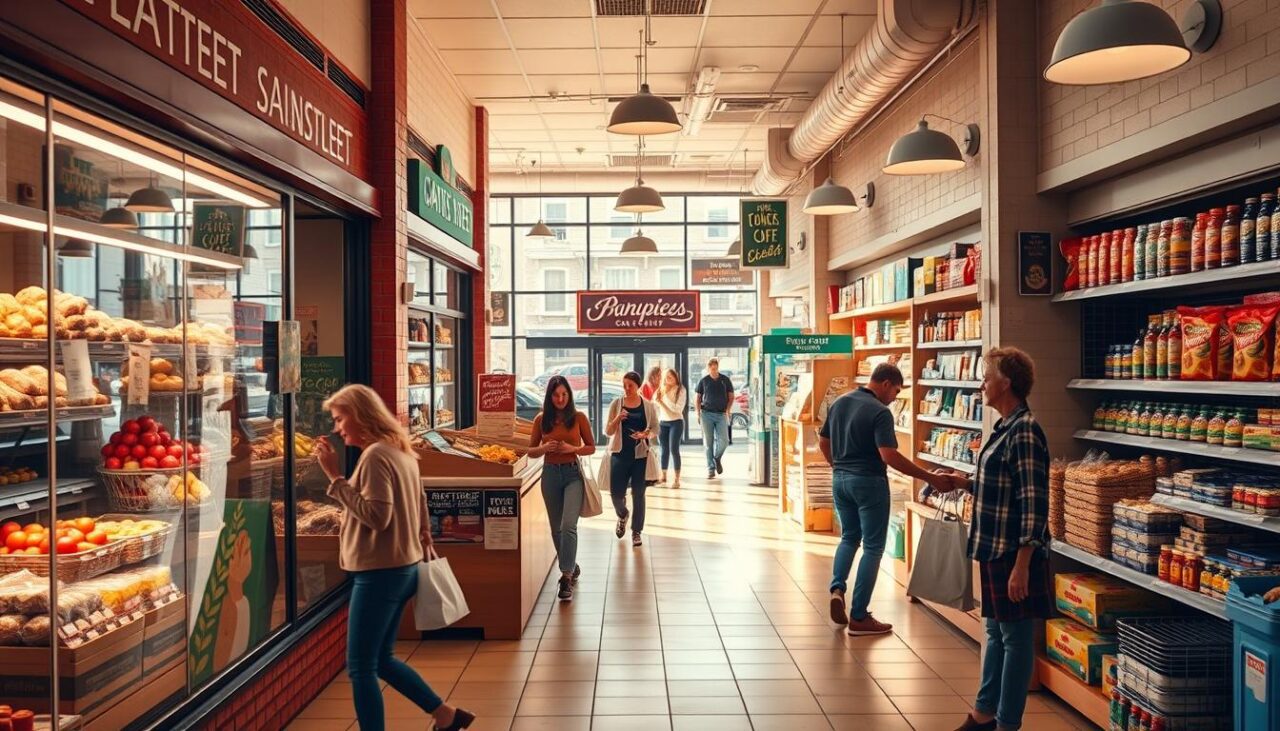
Local closures and longer treks
With the nearest Walmart an estimated 45-minute walk and Giant Eagle about a 1-hour-15-minute walk across the Allegheny River, seniors and non-drivers face real hardship. Trips that once took a single errand now demand extra time, planning, and often unsafe routes in bad weather.
Small-town resilience
By contrast, Charlie Johns Store in Speculator, New York—run by Jonathan and Lynn Lane since 1939—remains open nearly every day. It closes only on three holidays and serves as a hub where people combine errands and meet neighbors.
Why access matters
The Heights Plaza situation also raises questions about future tenants; asset manager Richard Lubkin will be central to follow-up coverage. Predictable hours and trusted local ownership reduce friction for families juggling work, childcare, and transport limits.
- Immediate impact: Uncertain closing dates affect pantry stability and shopping routines.
- Ripple effects: Emptying shelves show residents adapting quickly to changing options.
- Local contrast: A reliable rural store highlights how steady service eases daily life.
A Family’s Story: From Stalled Plans to a Safe Trip for Groceries and Life’s Essentials
A flat battery turned a routine errand into a daylong scramble for one local family. This short story shows how quickly access to basics can collapse when transportation fails.
The challenge they faced
The family planned a simple grocery run and a few quick stops. Then their car wouldn’t start and a ride fell through.
What should have been a short trip stretched across the entire day, affecting groceries, a bank deposit, and a post office visit.
How our team stepped in
We coordinated timely support that preserved choice and dignity. Volunteers set pickup and drop-off windows to match service hours. That kept deadlines from being missed.
Safety guided every decision: direct routes, clear communication, and a dependable timeline reduced stress.
“We focused on letting the family pick their own items and keep dietary preferences intact.”
The outcome
The family was back on the road the same day and completed their list at the store, bank, and post office.
- Meals stabilized: Timely help prevented food waste and added bills.
- Costs avoided: Aligned timing prevented late fees and missed deadlines.
- Local impact: Swift action shows how a small network can prevent a long-term gap in community access.

Community Impact in Action: From Grocery Access to Volunteer Power
Placing a second site inside TriStar Centennial aims to meet families where they already go. This expansion is designed to double the number of households who can shop with dignity and choice.
Serving more neighbors: A second location at TriStar Centennial Medical Center is on the way
The new site will embed a low-friction grocery option inside a health setting. That link helps patients and families combine visits and errands without extra trips.
Why volunteers are the engine: 4,000+ strong and growing to meet rising need
Volunteers keep shelves moving and doors open. With more than 4,000 people already involved, recruiting and training are key to scaling service responsibly.
Facing a waitlist head-on: 2,400 families and the hard choices no grocery nonprofit wants to make
A waitlist of over 2,400 families forces clear rules. Leaders use partner-agency referrals to reach those in greatest need while capacity grows.
From post to progress: How campaigns, events, and personal letters move the mission forward
Momentum is measurable: Nashville’s Got Talent raised $218,000, and 400 handwritten letters helped unlock new gifts.
The capital campaign still needs $1.8 million to finish the site. Every post, event, and personal appeal narrows that gap.
- Expansion pairs healthcare and grocery access for practical support.
- Volunteers and data-driven scheduling will match peak shopping and transport windows.
- Fundraising converts local events and letters into real shopping hours for families.
“Embedding choice-based grocery access in a medical setting shortens travel and preserves dignity.”
Conclusion
A single closure can turn routine errands into a full-day challenge for many families. Quick, local responses made a real difference for the household we featured.
Timely help restored safe travel and let the family finish stops at the store, the bank, and the post office. Small actions kept meals on the table and avoided late fees.
Scaling that impact means opening the TriStar Centennial site, recruiting more volunteers, and closing the remaining fundraising gap. Every post, event, and personal outreach builds momentum toward fuller shelves and shorter waits.
Stay informed and get involved so access to nutritious food stays steady, practical, and respectful of each household’s needs.