This buyer’s guide shows how small changes can make a big difference in feel, braking, and power. It maps a practical route so you can pick parts that fit your goals and budget.
The guide highlights real examples and price ranges, from iron 6-piston brake kits around $4,395–$4,595 to Öhlins TTX Plaid coilovers at $9,995–$15,995. You’ll see how pads, brake lines, tires, sway bars, and coilovers work together to improve grip and handling.
Expect clear advice on choosing the right mix for daily driving, track days, or light off-road use. We cover installation complexity, the look and stance changes from springs or coilovers, and smart bundle strategies to avoid mismatched parts.
Key Takeaways
- Start with grip, alignment, and brakes for the fastest, safest gains.
- Match coilovers, sway bars, and springs to your driving goals and budget.
- Use price ranges to compare value—budget pads and lines first, big-ticket coilovers later.
- Wheels and tires often give the best lap-time and safety boost per dollar.
- Plan bundles to save money and keep parts working in harmony.
Start Here: How to Maximize Performance on a Budget, Today
You can boost how your car feels today by focusing on a few maintenance items that cost little but pay back fast. Start with tire pressures, a proper alignment, and a fresh brake-fluid flush. These set the baseline handling points that make steering crisper and braking more consistent.
Next steps should target the biggest change per dollar.
- Replace stock brake pads and use high-temp fluid; add stainless brake lines for firmer pedal feel.
- Spend early dollars on better tires plus a goal-oriented alignment to unlock grip.
- Reduce rotational mass with lighter wheels and hub-centric hardware for faster reactions.
If the vehicle is turbocharged, a conservative tune can add power efficiently. For naturally aspirated cars, save intake and exhaust work for phase two. Set a price ceiling, track what you changed, and choose parts that deliver measurable gains so every investment aligns with your plan.
Prioritize by Driving Style: The Smart Path to Upgrades
Pick upgrades that match how you actually drive. Choose parts that make the car more usable and fun for your day-to-day needs or your weekend goals.

Street-first: comfort and usability
Daily driving calls for parts that add grip and calm cabin life. Start with tires sized for your climate and road conditions.
Swap to low-noise, low-dust brake pads and fit a mild exhaust for tone without drone on long trips.
Track-focused: balance and heat management
Prioritize thermal control with quality pads and rotors, then tune sway bar rates to change rotation without upsetting balance.
Coilovers give spring and damping control, and a proper alignment using clear points beats chasing raw power.
Off-road and overland: durability and geometry
A well-chosen lift kit plus tougher tires with sidewall protection transforms capability.
Revisit control arm geometry after suspension changes and confirm wheel/tire clearance with any kit to keep articulation and comfort in check.
- Tip: Make one change at a time and test—small tweaks reveal the real difference.
Braking First: Low-Cost Changes That Make a Big Difference
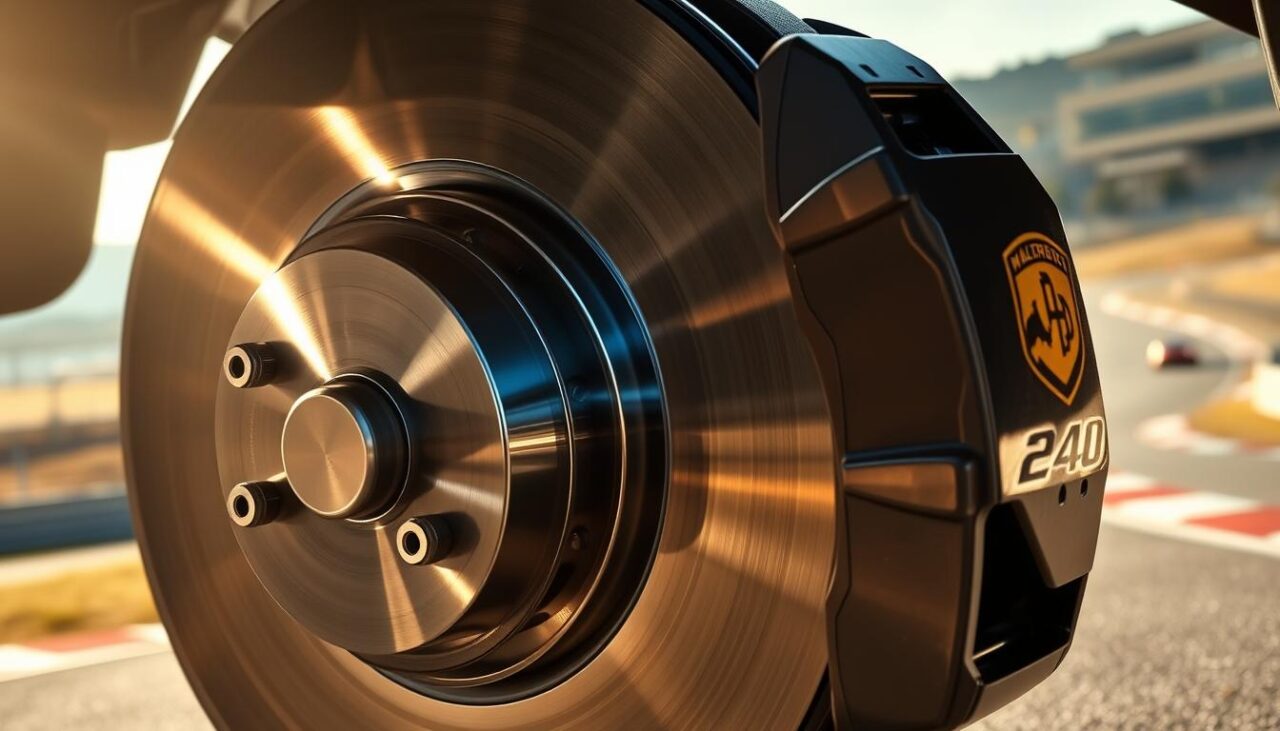
A modest brake refresh can tighten pedal feel and cut stopping distances without a full system swap. Start with pads and lines to get immediate, usable gains that suit daily driving or occasional track use.
Performance brake pads and stainless lines for better bite and pedal feel
Match the compound to your use case. UP x PFC high performance brake pads for Tesla models range from about $215–$630 depending on model and compound. Stainless steel sport brake lines run roughly $200–$295 and give firmer, more consistent pedal feel.
Rotor upgrades: drilled/slotted replacement rotors to fight heat and fade
Drilled or slotted replacement rotors shed heat and gases so pads contact consistently. This reduces fade on long descents and repeated stops without a full caliper swap.
Street and track brake kits: mixing pads, rotors, and fluid the right way
- Use street-friendly pads with higher-temp fluid for daily drivability.
- Step to track compounds and slotted rotors for frequent hard stops.
- Carbon fiber cooling ducts ($1,795 for Model S/Plaid) help for repeated high-speed stops.
Big brake kits overview and price examples
Big brake kits expand rotor size and pad sweep. UP x PFC iron 6-piston front BBK for Model 3/Y runs about $4,395–$4,595. Superlight carbon ceramic front BBK options start near $4,995 and can exceed $9,295 depending on model and spec.
Finally, check wheel fitment and confirm parts clear your vehicle before you order.
Tires and Wheels: The Fastest Way to Real-World Performance
A well-chosen set of tires and wheels will change how a car accelerates, corners, and stops. Grip comes from the contact patch and compound, so the right tire matters more than many pricier parts.
High-performance tires for grip in the dry, wet, and on the street
Match tire choice to climate and driving style. Look for treadwear ratings, wet braking scores, and noise levels. Grippier compounds help lap times but may wear faster.
“A proper set of tires transforms everyday safety and lap-day confidence.”
Lightweight wheels and wheel spacers: reduce rotational mass and sharpen response
Light wheels free up power and make the chassis feel sharper. Dropping unsprung weight improves acceleration and braking more than the same mass removed from the body.
- Choose a balanced set: width and diameter affect sidewall and ABS calibration.
- Use wheel spacers only with hub-centric fitment and full thread engagement for safety.
- Before buying, weigh price versus lifespan—some tires cost less but need replacement sooner.
After installation, get a proper alignment. Rotate tires on schedule and monitor pressures to protect your investment and keep handling consistent.
Suspension That Pays Off: Springs, Bars, and Alignment for Control
A well-tuned suspension turns vague steering into precise cornering with minimal cost. Start with simple parts that change geometry and body control first. These deliver repeatable handling gains without swapping shocks or struts.
Lowering springs and dual-rate sets
Lowering springs reduce wheel gap and drop the center of gravity for sharper turn-in and better mid-corner stability. Dual-rate designs keep a soft initial feel and stiffen under load, so daily comfort stays intact.
On Tesla models, dual-rate linear lowering spring sets run about $420 for Model 3 and Model Y. That makes this set a high-value change for handling gains.
Sway bar and strut brace tuning
Adjustable sway bar sets let you tune roll resistance front-to-rear without altering spring rates. A stiffer front bar increases understeer control; a stiffer rear helps rotation.
Adjustable sway bar kits for Model Y range $295–$565, with end links about $134–$299. For chassis stiffness, a GT rear strut tower brace (around $2,295 for Model S/Plaid) sharpens steering feel by reducing flex.
Alignment “points” and control arms
Precision alignment points matter. Add negative camber with adjustable arms to improve outer shoulder contact on track days.
- Front upper control arms: $180–$1,595.
- Rear camber/toe arm set: about $420 per set.
- Billet arms and spherical bushing kits reduce deflection for consistent tire contact.
After installing springs, bars, or arms, book a performance alignment and re-torque fasteners after a short break-in to lock in results.
Breathing and Brainpower: Intake, Exhaust, and Tunes That Add Power
Clever airflow changes and careful calibration can increase power in a predictable, street-friendly way. Start with cold air flow, then match the exhaust system and finish with a measured tune for the safest gains.
Cold air intake and exhaust system combos
A well-designed cold air intake feeds the engine cooler, denser air for better combustion and crisper throttle response. That richer induction note is a common bonus.
Pair an intake with a correctly sized exhaust and the engine exhales more freely. Reduced backpressure helps midrange torque and top-end pull.
Choose quality mufflers and piping to control drone and keep catalytic function when the car stays street legal.
Flashes and tunes for factory turbo cars
Factory turbo vehicles often respond well to conservative flashes that alter boost, timing, and fueling. A modest tune can unlock reliable power without new hardware.
- For naturally aspirated engines, follow a staged path: intake, exhaust system, then calibration.
- Monitor air-fuel ratios, intake temps, and knock protection in the tune to safeguard the engine.
- Match pipe diameter and muffler design to displacement—bigger is not always better.
“Target making power while keeping reliability and emissions checks in mind.”
Where to Shop and What It Costs Right Now: Parts, Kits, and Systems
Where you buy parts and how you combine them shapes both cost and real gains. Use these price ranges to plan phased installs that fit your goals and wallet.
Coilover kits by use-case
Budget and mid-tier coilover solutions for Model 3 and Model Y start around $2,495–$2,895. Race Pro options push toward aggressive setups.
Flagship Öhlins TTX kits for Model S Plaid range from $9,995–$15,995 for top damping control.
Brakes, pads, and rotor sets
Street and track brake pads run from about $215–$630 depending on model and compound. Rotor + pad set pricing sits near $4,995–$5,495.
Full big brake systems span iron 6-piston kits (~$4,395–$4,595) up to higher-end ceramic options.
Lift, leveling, and chassis control
Model Y leveling lift kit is about $495. Dirt & Snow coilover lift systems typically list near $2,495 for added clearance.
Rear camber/toe/traction arms run roughly $420–$1,895, while spherical bushing kits are around $1,695.
- Tip: Buy coherent sets—pair coilover kit with sway bars and a proper alignment.
- Confirm wheel clearance and model-year fitment before ordering.
Performance & Upgrades: Bundle Strategies to Stretch Your Budget
A smart bundle approach gets more gains per dollar by solving multiple handling and braking needs at once.
Build coherent sets that tackle grip, stopping, and geometry in one visit. A pads + tires + alignment set is a proven way to boost stopping, steer feel, and cornering grip without repeated labor.
Best-value combos to consider
- Street comfort set: lowering springs, a matched sway bar, and street pads to cut roll and keep daily ride quality.
- All-round set: pads + tires + a goal-oriented alignment — quick gains that change the driving experience a lot.
- Track-curious set: pad/rotor pair with a moderate rear bar tweak for confidence and repeatable brake feel.
Prioritize alignment points after each install. Even top parts underperform until geometry is dialed.
“Stage intake and exhaust first, then tune, so the ECU uses the hardware for more power.”
Tip: Test drive between phases. Rotate through sets one way at a time, note the difference, and plan the next set to match your target experience.
Conclusion
,Focus first on grip and brake feel: that simple foundation changes how every kit and system behaves.
Start with tires, brake pads, fresh fluid, and a goal-focused alignment to make the car feel safer and more agile. These low-cost parts give the biggest change per dollar and set the stage for suspension and power work.
Use price ranges and phased sets to plan installs, bundle related work to save on labor, and pick components that match your driving needs. Recheck alignment points, torque fasteners, and road-test each change so the experience improves step by step.
In short: choose complementary parts, keep expectations practical, and build toward power or a big brake kit only after the basics are right. That way your vehicle looks, feels, and performs when it counts.