
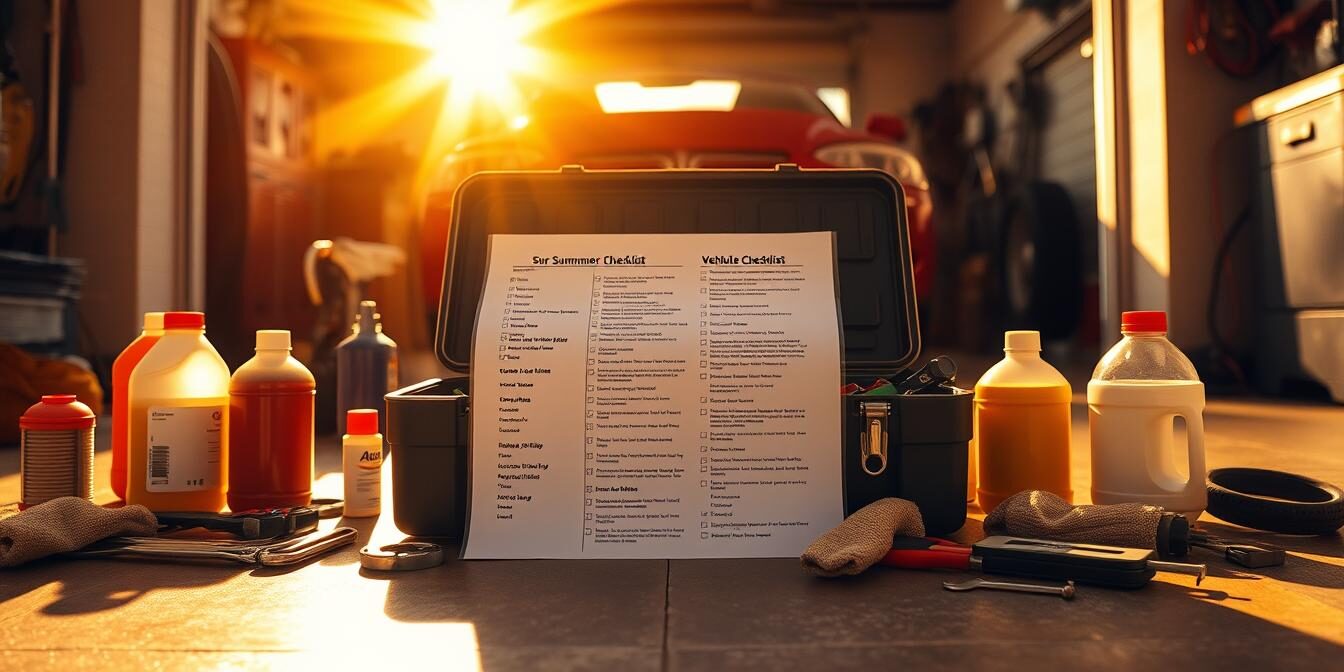
Hot weather can stress your vehicle fast. A few simple checks before a trip help prevent breakdowns and keep systems running well.
Start with quick, do-now tasks: confirm oil and coolant levels, inspect the air filter, and check tire pressure and tread depth. These steps help ensure safe performance under summer conditions.
Beyond checks, think longer term. Rotating tires and following the owner’s manual for service intervals protects warranties and improves resale value. Waxing every six months shields paint from UV and contaminants.
Choose a reputable service center for seasonal prep. Transparent estimates and qualified technicians deliver preventative work that saves time and costly repairs, keeping you confidently on the road.
Key Takeaways
- Perform quick pre-trip checks: oil, coolant, air filter, tire pressure, and tread.
- Follow owner’s manual for service intervals to protect warranties.
- Rotate tires and wax twice a year to preserve performance and finish.
- Pick a trusted service department for clear estimates and skilled technicians.
- Document services and mileage to plan around summer travel conditions.
Why hot weather strains your vehicle and how this checklist helps
When temperatures climb, under‑hood stress rises and small faults can become big problems. Heat raises under‑hood temperatures and pushes the engine and cooling system harder, increasing the risk of overheating damage.
Hot pavement also warms tires, boosting pressure and wear. Higher tire heat changes grip and can lengthen stopping distance on a long road trip.
Heat speeds evaporation and breakdown of essential fluids. That reduces fuel efficiency and stresses seals and gaskets. Batteries age faster in high heat too; internal corrosion and shorter service life are common.

Follow manufacturer recommendations and adjust service timing if you do a lot of stop‑and‑go driving or tow heavy loads. A short pre‑trip inspection targets the most heat‑sensitive components so you can help ensure reliable summer performance.
- Prioritize cooling, tires, fluids, and battery checks.
- Schedule a pre‑trip inspection to catch small issues early.
- Adhere to the owner’s guide for routine car servicing and warranty protection.
Keep the engine cool to prevent damage in high temperatures
A healthy cooling system is the best defense against summer engine stress. Timely checks and targeted service help keep engine temperatures in range and reduce the chance of expensive damage.
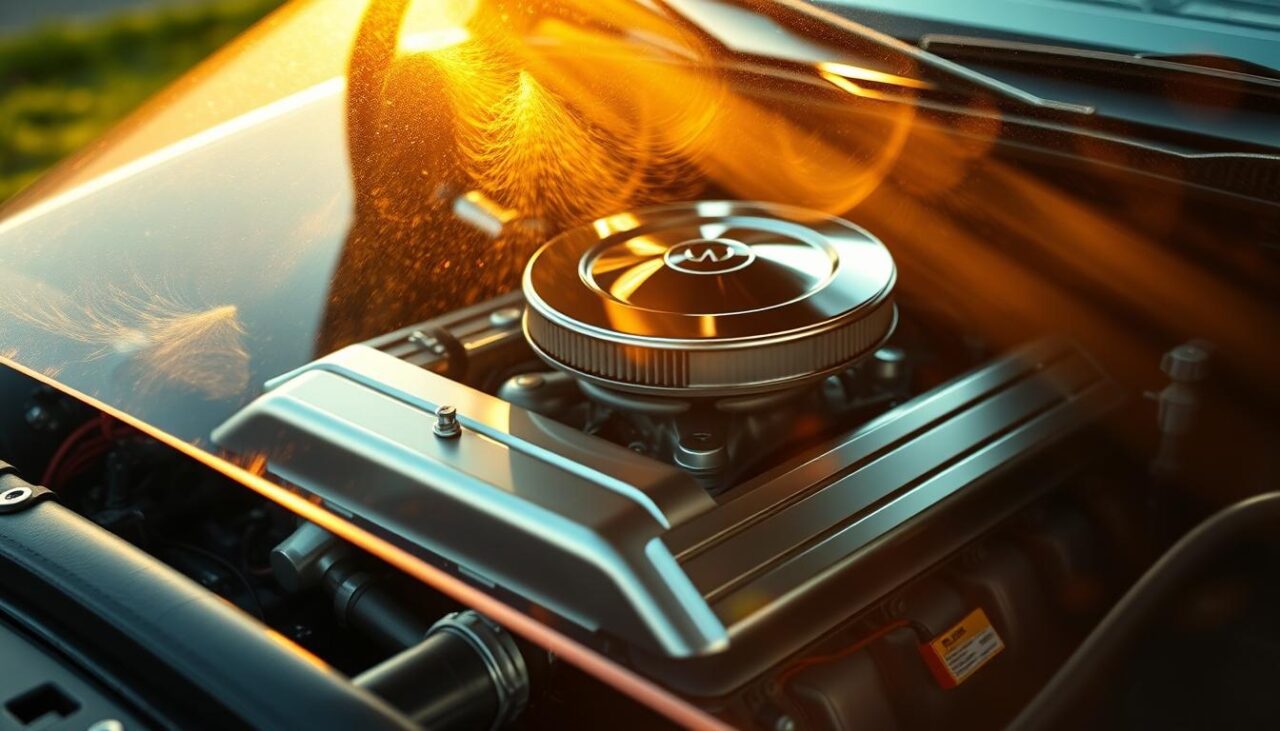
Radiator coolant fluid exchange removes old coolant and refills the system with a product that meets vehicle specifications. A proper exchange protects against internal corrosion and restores heat transfer. Most technicians recommend the exchange at specified miles and time intervals, and proper disposal is included with the service.
Inspect caps, hoses, and airflow
Verify the antifreeze concentration for summer — a 50/50 mix is common, but check your owner’s guide. Inspect the radiator cap seal and pressure rating; a weak cap lowers system pressure and reduces boiling protection.
Check upper and lower radiator hoses for soft spots, swelling, cracks, or seepage at clamps. Clean condenser and radiator fins so air flows freely; compressed-air clearing can improve cooling efficiency.
Watch symptoms and follow manufacturer guidance
Look for a rising temp gauge, steam, a sweet coolant smell, or a drop in A/C performance at idle. If you see these signs, shut down safely and seek service.
- Consider a quick oil and filter check; fresh oil helps dissipate heat.
- After service, monitor the reservoir and check for driveway drips to catch leaks early and protect emissions components.
- Follow vehicle manufacturer recommendations for coolant type, exchange intervals, and compatible replacement parts.
Protect tires and braking performance under heat stress
High summer heat can quickly sap tire grip and stress braking systems on long drives. Check tires and the braking system before a trip to reduce risk and keep performance steady.
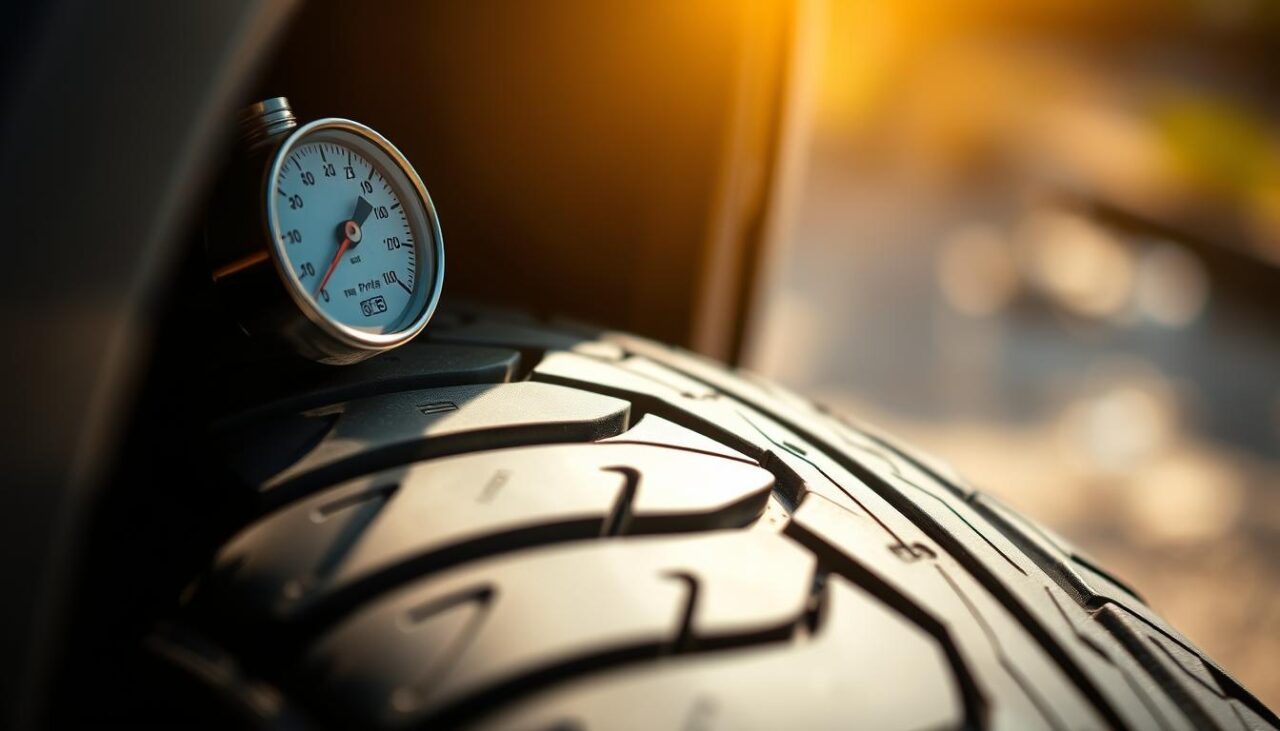
Check tire pressure, tread depth, and TPMS alerts before summer road trips
Set tire pressures to the door‑jamb specification when tires are cold. Heat and heavy loads can spike pressure on hot pavement, so recheck before a long road drive.
Use the penny method to test tread depth. Replace tires that can’t channel water well during summer storms.
Address TPMS lights promptly; a persistent warning may mean low pressure or a sensor fault that needs professional service.
Rotate, balance, and align tires to maintain grip and even wear
Rotate tires at regular miles to even out heel‑to‑toe wear and extend service life. Wheel balancing removes high‑speed vibration and improves steering feel.
Combine balancing with an alignment to keep even wear and straight‑line stability. Many service centers, including Jiffy Lube, offer rotation, balancing, and alignment services.
Brake fluid exchange and regular brake inspections for reliable stopping
Schedule a brake inspection to measure pad thickness, check rotors or drums, and verify the hydraulic system is leak‑free. Complimentary inspections may be available with a tire rotation.
Exchange brake fluid at recommended intervals to preserve boiling point and pedal feel during hot driving and long downhill stretches. Replace worn parts before a trip to avoid pulsation and longer stopping distances.
- Tip: Recheck pressures monthly and before long trips; pressure changes about 1 psi per 10°F.
- Tip: Replace tires or brake parts showing excessive wear to keep vehicle performance reliable.
Support battery and electrical reliability in extreme heat
Before a heat wave, verify the battery and charging components so the vehicle starts reliably when temperatures rise. Extreme heat lowers reserve capacity and accelerates internal wear.
Battery checks, terminal cleaning, and secure connections
Request a battery load test to confirm cranking output and reserve capacity under summer electrical loads. Technicians can spot cells near failure before you face a no-start.
Have terminals cleaned and a protectant applied; surface corrosion causes voltage drop and can mimic a failing battery. Tighten cables and hold-downs so vibration and heat don’t speed internal damage.
- Inspect charging system output and belt condition to ensure the alternator supports the A/C and cooling fans.
- Replace an aging battery proactively if tests are borderline to avoid unexpected downtime.
- After service, check exterior lights and interior electronics to confirm stable voltage across the system.
Jiffy Lube battery services include terminal cleaning, cable replacement, and tightening. Battery replacement normally covers testing, installation, and proper disposal so your vehicle meets hot-weather needs.
Maintain oil and critical fluids for optimal engine and transmission performance
Fresh lubricants and correct fluid levels keep drivetrains running cooler on long drives. Regular checks reduce friction, lower operating temperatures, and help ensure reliable operation when ambient heat rises.
Timely oil change and filter replacement to protect the engine
Change the oil and filter on schedule based on the owner’s manual. Depending on oil type and driving, intervals vary from 3,000 to 10,000 miles.
Fresh oil improves heat dissipation and reduces wear, which supports engine life and can aid fuel economy in summer conditions.
Transmission, differential, and transfer case fluid services
Exchange transmission fluid at prescribed intervals to keep shift quality and thermal stability in hot traffic. Consider differential and transfer case fluid service when towing or driving in severe heat.
When applicable, replace the transmission filter to preserve hydraulic pressure and filtration for reliable operation.
Monitor fluid levels between services to help ensure longevity
Check coolant, transmission, power steering, brake, and washer fluid regularly. Small leaks get worse in heat, so top off fluids and log dates and levels in your vehicle record.
- Tip: Use the viscosity and specs listed in manufacturer recommendations for hot-weather driving.
- Tip: Ask about complimentary top-offs after an oil change within the service window.
- Tip: Replace the engine air filter on schedule to support combustion and ensure optimal performance.
Boost air and A/C system health for comfort and engine efficiency
Keep vents blowing cold and the engine drawing free air to avoid strain when temperatures rise. A few targeted checks help the A/C and intake work together to preserve overall performance.
A/C evacuation and recharge
Schedule an A/C evacuation and recharge if cooling feels weak. Correct refrigerant level and oil support compressor longevity and steady vent temps.
Proper service replaces refrigerant per manufacturer specs and helps prevent premature parts wear.
Engine and cabin filter replacements
Replace the engine air filter and cabin air filter at recommended intervals to keep airflow steady. A clean air filter improves throttle response and fuel use in dusty summer conditions.
Fresh cabin filters also boost HVAC airflow and interior air quality during smoggy or allergy-heavy days.
Serpentine belt inspection
Inspect the serpentine belt for cracks, glazing, or fraying. That belt drives the alternator, water pump, and A/C compressor, so failure affects cooling and electrical output.
Listen for squeal at startup or with A/C on and address tensioner or belt wear before a long trip to help maintain vehicle performance.
- Tip: Confirm condenser and radiator fins are unobstructed to improve heat exchange.
- Tip: If cooling or intake issues persist, seek professional service for parts replacement and diagnostics.
Car Care & Maintenance aligned with manufacturer recommendations
Align scheduled visits with factory specs to protect warranty coverage and keep systems running at peak. Follow the owner’s manual for recommended intervals on oil, filters, spark plugs, and fluid exchanges.
Follow vehicle manufacturer recommendations for service intervals
Use the manufacturer recommendations as your schedule backbone. Routine car maintenance helps avoid costly repairs and preserves fuel economy, battery life, lights, and brakes.
Tip: Book transmission and transfer case fluid exchanges at the miles the manufacturer lists.
Use diagnostics and inspections to catch issues early
Request engine diagnostics when a warning light appears. A scanned code and written description guide accurate repairs and reduce guesswork.
Also add state inspections and emissions checks to your calendar. Include brake inspections, tire rotation, and spark plug replacement per the manufacturer to ensure optimal performance.
- Choose reputable service departments for OEM-spec fluids and clear estimates.
- Document every visit, parts, and diagnostics to support resale value.
- Routine schedules and prompt diagnostics reduce downtime and costly repairs.
Conclusion
Finish your summer checklist with a quick, focused plan. Recap the five essentials: keep the engine cool, protect tires and brakes, support the battery, maintain oil and key fluids, and service A/C and air systems.
Schedule any overdue service or replacement items now so the vehicle is ready for long road driving. Follow the owner’s manual intervals and use reputable technicians for correct fluids and procedures.
Keep a simple log of dates, miles, and work to help maintain vehicle performance and track future needs. Then take these steps before the next heat wave: book an inspection, confirm tire pressures, top off fluids, and test the battery.
Act now to reduce breakdown risk and enjoy safer summer travel.