
Choosing the right tires affects safety and performance every time you drive. This guide explains how all-season and winter tires differ in tread, rubber compound, and temperature handling so you can pick the best fit for your vehicle.
We cover stopping distance, winter traction, and how tires work with ABS and traction control. You’ll also learn how routine service like rotations and alignments helps extend tire life and lower long-term costs.
Houston drivers get practical notes on local options, from express oil-and-lube shops to full-service centers offering warranties and coupon deals. Use those services to schedule inspections and same-day work when needed.
Key Takeaways
- All-season tires balance year-round use; winter tires excel below freezing and on snow.
- Correct tire choice improves braking, traction control, and overall vehicle safety.
- Regular rotations, alignments, and inspections preserve tread and boost performance.
- Houston shops offer warranties, express services, and coupons to cut service time and cost.
- Match tire type to driving needs—commute, SUV, or truck—for best comfort and fuel economy.
Why Your Tire Choice Matters for Safety and Performance Today
Tire selection directly changes braking, stability, and on-road confidence. The rubber compound and tread pattern determine how your vehicle reacts in an emergency and during everyday driving.
How tires impact braking distance and stability on the road
Tires are the only contact point between a car and the road, so compound and tread shape stopping distance and cornering grip.
Routine checks like tire rotation and brake inspections during full-service oil changes help maintain steady handling. ASE-certified technicians at shops such as Master Car Care and Collision report safer braking when tires wear evenly and brakes are checked together.
Seasonal conditions in the U.S. and what that means for your vehicle
Freeze-thaw cycles, heavy rain, and occasional snow change how rubber performs. In cold weather a softer winter compound holds grip where all-season rubber can harden and lengthen stopping time.
- Hydroplaning resistance depends on tread evacuation channels and siping density.
- ABS and traction control work best when tires have ample grip; worn or mismatched tires force systems to intervene more often.
- Mechanics can spot uneven wear that hints at alignment or suspension issues, reducing predictable handling.
“Comprehensive diagnostics help identify performance issues early for Houston drivers.”
All-Season Tires vs. Winter Tires: Key Differences Explained
Choosing between all-season and winter rubber changes how a vehicle performs the moment temperatures drop.
Tread compounds and temperature range
All-season compounds are built to work across a broad temperature band but can stiffen as it gets very cold. That reduces grip and increases stopping distance.
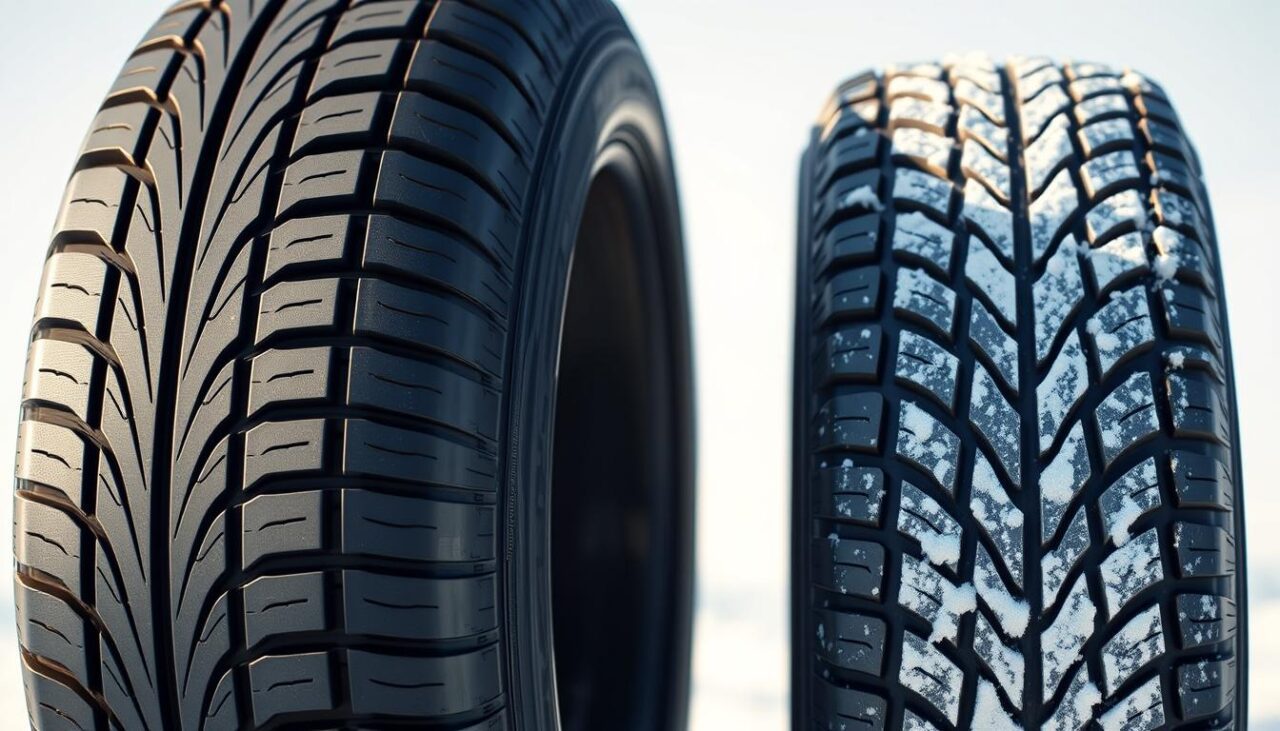
Winter compounds stay pliable below about 45°F, keeping traction reliable on cold pavement and in snowy conditions.
Tread patterns, siping, and snow traction
Winter patterns use deeper lugs and dense siping to bite into snow and slush. These components boost starts, stops, and cornering when roads are slick.
All-season patterns prioritize wet evacuation and tread life, which helps in rain and offers quieter performance for most vehicles.
Road noise, ride comfort, and fuel efficiency trade-offs
Winter rubber and aggressive tread can add road noise and slightly reduce fuel efficiency. Often, that trade-off is worth the added safety in cold weather.
Routine services like rotations, pressure checks, and alignments preserve performance and limit noise or uneven wear.
- Auto diagnostics can flag frequent traction events tied to worn or cold-stiffened rubber.
- Powerful engines and AWD still need winter tires for best cold-weather grip.
- Full-service visits at shops such as Master Car Care and Collision often bundle rotations and brake inspections that complement seasonal tire changes.
“Choosing the right tire for the season reduces surprises and keeps braking predictable.”
Performance by Condition: Dry, Wet, Snow, and Ice
How a tire performs in specific weather shapes safety on every trip. Read on for quick, condition-by-condition guidance so you can match tires to real driving demands.
Stopping power and cornering in rain and slush
On dry roads, most modern all-season rubber gives steady handling and predictable performance.
In heavy rain, tread channels and dense siping fight hydroplaning. Worn tread raises stopping distance and reduces steering precision.
Master Car Care and Collision includes tire rotation and brake inspection in full-service oil changes to keep wear even and brakes responsive.
Ice and packed-snow traction: When winter tires are non-negotiable
Slush needs aggressive slush evacuation. Winter designs clear the contact patch and support safer braking and cornering.
On ice or packed snow, winter tires are often non-negotiable. Their pliable rubber and micro-edges provide mechanical keying that improves safety.
Mechanics can use diagnostics to track ABS activation and spot issues caused by mismatched or worn tires. Schedule service before cold snaps to protect efficiency and avoid traction surprises.
- Efficiency: Season-appropriate tires reduce slip and save fuel when weather worsens.
- Brakes: Inspections paired with rotations keep brake systems and tires working together.
- Diagnostics: Early checks reveal uneven wear or alignment problems that show up first on wet or icy roads.
“Correct tire choice and timely service reduce surprises and make braking predictable.”
Car Care & Maintenance Considerations with Tire Selection
Regular checks and simple service keep new tires performing at their best for longer. Plan rotations, geometry checks, and pressure holds as part of routine visits to avoid uneven wear and surprise repairs.
Tire rotation intervals to extend life and efficiency
Rotate tires every 5,000–7,500 miles or at each oil change to balance tread wear across axles. Master Car Care and Collision includes rotations with full‑service oil changes to simplify scheduling and reduce downtime.
Alignments and suspension checks to protect new tires
Post-install alignments validate toe, camber, and caster so the vehicle tracks straight and tires wear evenly. Just Oil & Car Maintenance and Master Car Care both offer alignment and suspension inspections that catch worn ball joints, bushings, and shocks before they cause cupping or feathering.
- Bundling rotations with oil intervals saves time and cuts visits.
- Ask for tire pressure checks and rebalancing during each service to improve fuel economy and braking.
- Track tread depth and plan a timely change to preserve wet stopping distance and control.
Choose a shop that offers maintenance services in one visit to keep your vehicle in top shape and protect new tire investments.
How Tires Interact with Brakes, ABS, and Traction Systems
How tires bite the road changes everything your braking and stability systems do next.
Brake inspections and pad wear with different tire compounds
Tires with higher grip shorten stopping distances but can increase pad wear slightly as more force transfers to the road. Regular brake inspections identify pad thickness, rotor condition, and caliper operation so the system can use all available traction.
Master Car Care and Collision includes brake inspections in full‑service oil changes performed by ASE‑certified technicians. Just Oil & Car Maintenance emphasizes diagnostics and quick, professional service to resolve performance issues without upselling.
- ABS and traction control rely on consistent tire traction; uneven wear or mixed sets may trigger systems more often.
- Mechanics use diagnostics to read wheel‑speed sensor data and event logs to link ABS events to tire condition and pressure.
- Matching all four tires in size, model, and wear is often recommended for AWD vehicles to protect differentials and electronics.
Engine braking and drivetrain differences change deceleration feel. A mechanic may recommend repairs—like fixing a sticking caliper or resurfacing a warped rotor—to avoid hot spots that reduce friction and lengthen stops even with good tires.
“Documenting findings every visit builds a maintenance trail that supports safety decisions and preserves resale value.”
Service Packages That Protect Your Investment
Smart service plans bundle routine checks so small issues don’t become expensive surprises. Local Houston shops offer options that save time and keep tires, brakes, and fluids working together.
Express services for busy schedules
Express oil change lanes at Master Car Care and Collision deliver quick visits for drivers on the go. These services cut downtime and let you get back on the road fast.
Full-service visits: oil changes, fluid checks, and tire rotation
Full-service oil change packages include oil and filter replacement, coolant and brake fluid checks, brake inspection, and tire rotation. ASE-certified technicians perform these tasks to spec.
Diagnostics and alignment for optimal tire wear
Advanced diagnostics at Just Oil & Car Maintenance find vibration, pull, or traction complaints early. Alignments correct geometry that accelerates wear, and prompt repairs prevent costly follow-up work.
- Warranty: Some shops include a 2 Years Warranty on parts & labor.
- Scheduling an appointment streamlines parts and bay time; many Houston locations also accept walk-ins.
- A strong team ensures bundled services simplify billing and protect your car investment.
“Bundled service visits keep tread even and systems working together for safer stops.”
Expert Help You Can Trust in Houston
Find skilled local technicians who use modern scanners and provide clear, written estimates to keep you safe on Houston roads.
ASE-certified mechanics, advanced diagnostics, and a strong warranty
Just Oil & Car Maintenance offers one-stop auto repair with advanced diagnostics and a 2 Years Warranty Parts & Labor on many jobs.
Master Car Care and Collision staffs ASE-certified technicians for oil, brakes, and alignment work that follows factory procedures.
One-stop repair shop: brakes, suspension, transmission, and tire services
Choose a single repair shop that handles brakes, suspension, transmissions, and tire services so work is coordinated and tested before you leave.
- Work with ASE-certified mechanics who follow manufacturer steps and use state-of-the-art diagnostics.
- A cohesive team performs inspections, alignments, battery and lighting checks, plus axle and transmission repairs.
- Express and full-service options fit busy schedules while preserving thorough, factory-style service.
- Transparent estimates and a 2-year warranty give long-term peace of mind after repairs.
“Expert diagnostics isolate root causes quickly, reducing repeat visits and protecting your budget.”
Transparent Value: Promotions, Reviews, and Appointments
Transparent pricing, clear promotions, and honest reviews make it simple to pick a local shop that stands behind its work. Use coupons and customer feedback to compare real value across nearby areas before you book.

Seasonal coupons on maintenance services and repairs
Look for seasonal coupons like 10% OFF $100 or more to lower costs on oil, rotation, and repair services. Bundling an oil change with a rotation and inspection can stretch promotions further.
Customer reviews and why drivers highly recommend local shops
Reading reviews helps validate shop quality. Testimonials such as Teresa C.’s note professional, courteous staff and fair pricing.
“Professional, courteous service and affordable pricing.”
Walk-ins welcome and easy scheduling—book your appointment today
Many Houston locations accept walk-ins and phone scheduling. Call Car Care USA at 832-595-6666 or Just Oil & Car Maintenance at (346) 529-8787 or (346) 498-0422 to reserve bay time.
- Warranty on completed work adds peace of mind.
- Transparent estimates prevent surprises and save you time.
- Fast check-in and text updates keep you informed during service.
Choosing the Right Tire for Your Vehicle and Driving Style
Match tire choice to how you drive each week—commutes, hauling, or off‑road trips demand different priorities.
Commuter cars, SUVs, and trucks: Matching tires to use cases
Commuter drivers usually want a quiet ride, reliable wet braking, and top efficiency. Quality all‑season tires often fit this need well.
SUV owners benefit from tires with higher load capacity and reinforced sidewalls. Pair new rubber with an alignment to protect suspension angles and handling.
Truck drivers should pick durability and traction for hauling. LT‑rated all‑terrain or highway‑terrain options suit different loading and road demands.
- If you travel into colder regions, winter tires add a safety margin when temps fall.
- Mechanics can read treadwear ratings, speed/load indices, and recommend proper sizing for your vehicles.
- Fix suspension or steering issues before new tires to avoid rapid, uneven wear and avoid extra repairs.
- Auto services that include diagnostics will match tire choice to stability control and steering feel.
- Correct pressure and routine rotations protect efficiency and extend usable tread life.
A brief consultation with a local mechanic at Just Oil & Car Maintenance or Master Car Care saves time and money. It helps you avoid mismatched tires that fail to meet daily demands.
Maintenance Tips to Maximize Tire Life
Simple, scheduled checks make a big difference in tread life and braking predictability. Small habits save money and reduce risk. Follow a clear routine and pair tire checks with other regular services to stay on schedule.
Pressure checks, rotation timing, and visual inspections
Master Car Care and Collision recommends combining rotations and inspections with an oil change. Their full-service oil change includes tire rotation, brake inspection, and fluid checks by ASE-certified technicians.
- Check tire pressure monthly and before long trips—proper inflation boosts tread life, fuel economy, and stability.
- Align rotation timing with each oil change to simplify scheduling and keep wear even across all four corners.
- Do a visual inspection for nails, bulges, and uneven wear; catch problems before they cause a breakdown.
- Use factory torque specs when installing wheels and re-torque after a short drive to prevent loosening or rotor issues.
- Track oil changes, rotations, and alignments in a log. This record helps warranty claims and preserves resale value.