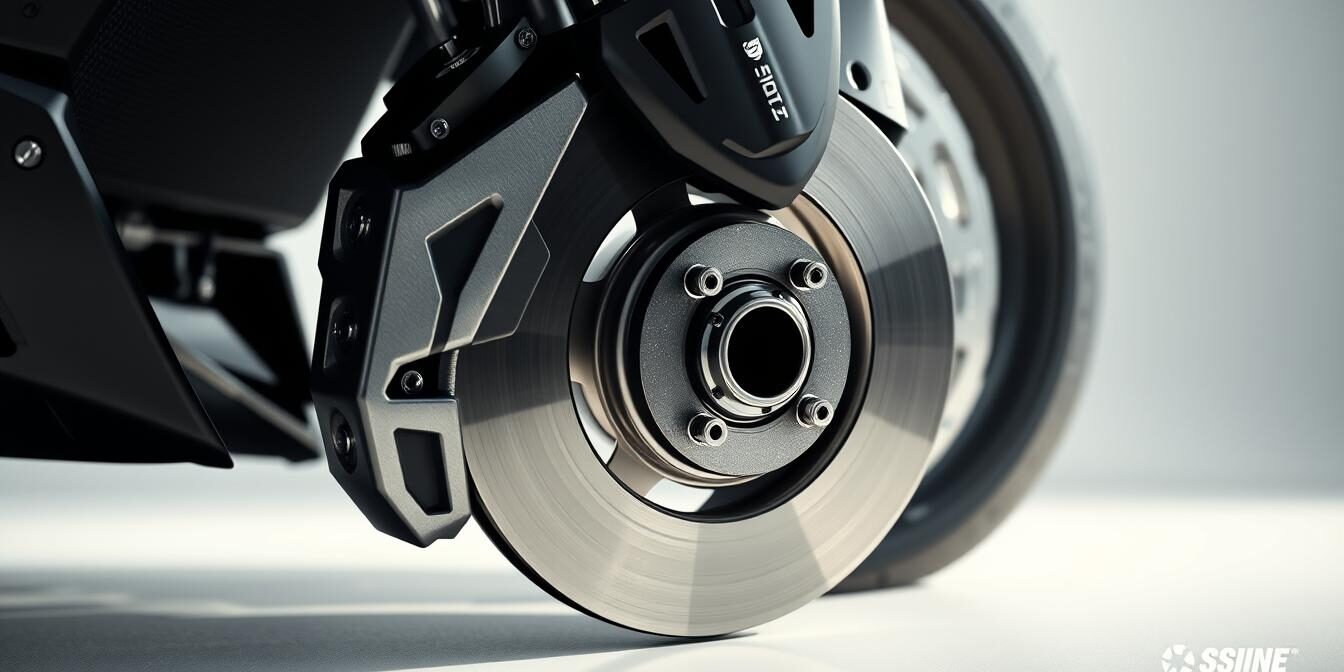
Upgrading your car’s brakes can change how a vehicle feels every day. This intro shows what stops you gain, how much it may cost, and the real-world value over stock parts.
The guide highlights concrete examples: Superlight Carbon Ceramic Big Brake Kits for Tesla models at roughly $7,695–$9,295, Iron 6-Piston front kits for Model 3/Y at $4,395–$4,595, rotor + pad sets near $4,995–$5,495, stainless lines for $200–$295, pad options $215–$795, and coilovers from $2,495 up to $15,995.
You’ll learn how brake pads, rotors, calipers, fluid, and lines work with engine output, tire grip, and air management. We focus on clear buyer benefits: shorter stops, firmer pedal feel, and consistent heat resistance on street drives.
This section frames a sensible path from simple pad-and-rotor swaps to full big brake packages so your car stays balanced and predictable.
Key Takeaways
- Braking parts can transform street driving without sacrificing comfort.
- Price ranges help match goals to budget before you buy.
- Core systems—pads, rotors, calipers, fluid, lines—each add measurable gains.
- Modern kits scale from basic sets to full carbon ceramic solutions.
- Expect shorter stops, better pedal feel, and improved consistency under heat.
Why Stopping Power Matters Right Now
A tighter, more consistent pedal is an immediate way to boost everyday confidence behind the wheel.
Small, budget-friendly changes—like street/track pad sets and stainless steel brake lines—deliver visible results fast. For Tesla Model 3/Y, pads run about $215–$570, while stainless line sets are roughly $200; Model X Plaid kits sit near $295. These parts sharpen initial bite, firm up pedal feel, and reduce fade during repeated stops.
Stopping distances depend on more than the brake hardware. Tires, vehicle weight, and suspension tuning all change how a car transfers load under braking. A proper set of tires and a tuned suspension work with better pads and lines to shorten actual stopping distance on the street.
Heat management and fluid quality also matter, even in city driving. Upgrading pad compounds and fluid helps prevent early fade on heavier cars or those with added wheels and accessories.
- Low cost, high feel: stainless lines and street pads give quick gains for a modest price.
- System thinking: tires, pads, lines, and suspension together produce the safest stops.
- Best for daily driving: stable friction and confident pedal travel without excessive noise.
How Performance Braking Systems Work vs. Stock
A well-chosen brake kit changes how a car resists momentum under real-world conditions.
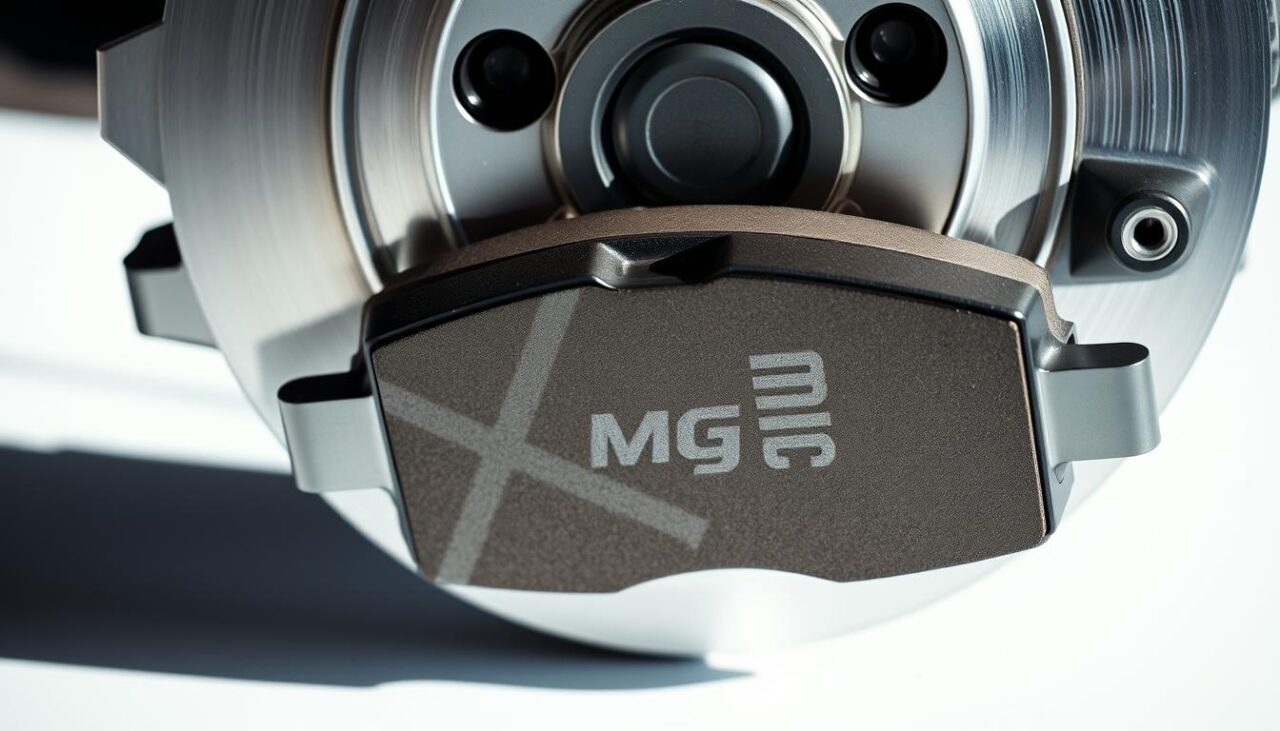
Brake pads: street compounds vs. performance brake pads
Street compounds favor low noise, low dust, and reliable cold bite for daily driving. They keep stops predictable and quiet.
Performance brake pads aim for higher friction and heat resistance so stops repeat without fade. For Model 3/Y, pad options run roughly $215–$795, showing choices from mild to track-focused.
Rotors: iron, drilled/slotted, and carbon ceramic systems
Iron rotors are cost-effective and durable for most drivers. Drilled or slotted rotors help vent gases and refresh pad contact during heavy use.
Carbon ceramic reduces rotating mass and holds heat far better, but the cost is higher—carbon ceramic rotor + pad kits for Model S/X Plaid list near $4,995–$5,495.
Brake fluid and stainless steel lines: pedal feel and fade resistance
Fresh fluid with a higher boiling point and stainless steel lines cut hose expansion versus stock rubber. That sharpens pedal feel and improves repeatability under strain.
Stainless steel sport brake line sets cost about $200–$295 and pair well with a pad-and-rotor set as a first step to gain consistent stopping power without a full multi-piston conversion.
- Compared with stock, a tuned system improves heat capacity and friction stability.
- Thermal management—moving air across rotors and pads—keeps the set in its optimal window.
- Right combinations deliver clearer modulation and better tire feedback near ABS intervention.
Real-World Gains: Street Safety, Track Confidence, and Daily Driving
A clear change shows up the moment you need it: shorter stops and steady pedal feel. On the street, pairing suitable pads with quality rotors and a well-bled hydraulic system is the fastest way to reduce stopping distance.
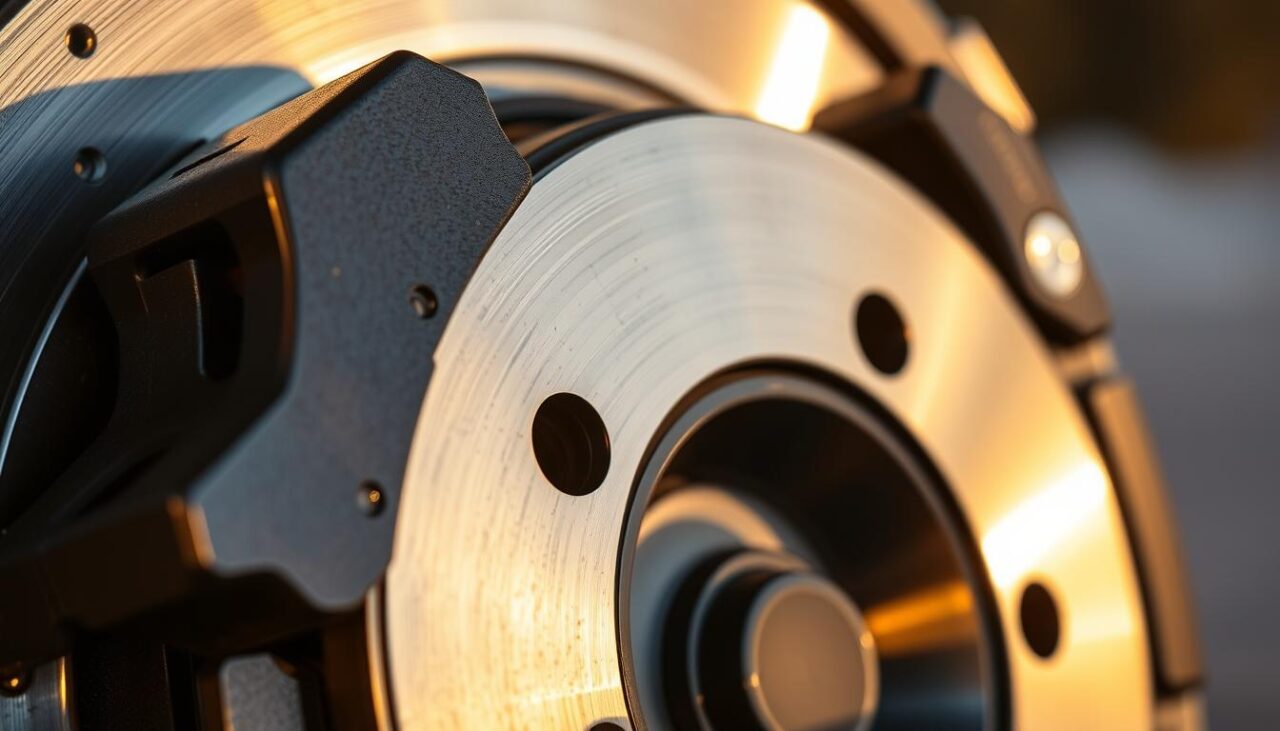
Shorter stopping distances and repeatable stops on the street
Street/track pad sets for Model 3/Y ($215–$570) and stainless line kits ($200–$295) deliver accessible gains. They lower pedal effort and stabilize initial bite during stop-and-go driving.
Managing heat and fade on track days and mountain descents
When heat builds, fade erodes confidence. Rotor and pad compounds designed for higher temps — or a full carbon ceramic front big brake kit ($7,695–$9,295 for Tesla platforms) — raise the thermal margin and keep stops repeatable.
- Tires and tire temperature convert brake torque into deceleration—match compounds and pressures to your use.
- Stainless lines plus high-temp fluid maintain a firm pedal during successive hard stops.
- Thoughtful component pairing—pads, rotors, fluid, lines—lets you build a set that fits how you drive.
Price, Parts, and Kits: What You’ll Pay and What You’ll Get
Budgeting for better brakes starts with clear price ranges and honest parts comparisons. That helps you pick the right path for street use, spirited driving, or heavier vehicles.
Pad and rotor upgrades: value-forward replacements and sets
Quality brake pads and rotor replacement sets start around $215–$570 for street/track pads. Rotor technology raises the cost but gives more heat capacity and bite.
Tip: A pad-and-rotor set often gives the best cost-to-gain ratio for most cars.
Stainless steel sport brake line sets: low-cost, high-feel upgrades
Stainless line sets typically cost $200–$295 and tighten pedal feel without changing calipers or rotors. They are an efficient first step for many owners.
Iron and carbon ceramic rotor + pad kits: big difference without full BBK
Iron rotor + pad kits bridge the gap to a true big brake feel at moderate cost. Carbon ceramic rotor + pad kits run about $4,995–$5,495 and add heat resistance plus lower rotating mass.
Big brake kits (BBK): calipers, rotors, pads—price ranges and options
Full BBKs range roughly $4,395–$9,295 depending on model and material. Consider install time, fluid, and potential wheel fitment when comparing options.
- Start with pads, lines, and fluid for cost-effective gains.
- Then move to rotor + pad kits or BBKs as power and use demand increases.
- Cross-check suspension, sway bar, and wheels to keep handling balanced.
Fitment and Compatibility: Wheels, Tires, and Factory Systems
Caliper clearance and wheel fitment are the first things to verify when planning a brake swap. Measure wheel inner barrel, spoke clearance, and rotor hat depth before ordering a big brake set.
Wheel clearance, spacers, and tire sizing
Big brake kits often need larger wheels or a different offset to clear multi-piston calipers. Verify wheel diameter and offset to avoid extra cost or delays.
Wheel spacers can help small fit issues, but use hub-centric spacers and check stud engagement. Also confirm tire diameter and section width so cooling airflow and suspension geometry stay correct.
Factory systems vs. aftermarket kits and pads
Some factory performance systems are very capable. Swapping to better brake pads or an OEM-caliper rotor/pad set can be a smart, lower-cost step before a full big brake conversion.
“Match the wheel, tire, and brake hardware as a complete set to keep the vehicle balanced.”
- Check ABS/ESC compatibility and bias when fitting aftermarket calipers.
- Control arm changes shift wheel position and affect clearance over full travel.
- Prioritize a daily-driving setup that keeps stock-like feel while clearing the new hardware.
Brakes Don’t Work Alone: Tires, Suspension, and Chassis Upgrades
Stopping power is only as useful as the contact patch and chassis control that back it up. Start with the tires — they decide how much brake force actually reaches the road.
Tires first: where the rubber meets the road for a huge difference
Tires determine maximum grip. Better compounds and correct sizes give the biggest real-world change in stopping and cornering before you touch calipers or rotors.
Tip: Match the tire choice to your wheel width and vehicle use to gain consistent braking and longer tread life.
Coilovers, lowering springs, and sway bars: keeping the car planted
Coilover suspension kits ($2,495–$15,995) and lowering springs reduce body roll and pitch. That keeps the tire contact patch stable under braking.
A matched sway bar set ($295–$565) controls roll and helps the car rotate predictably. Use a bar that fits your driving goals so pedal input translates to deceleration, not mid-corner lift.
Control arms, camber, and alignment: maximizing brake and tire contact
Adjustable control arm components—like FUCA and camber/toe arms—let you dial steering geometry for consistent contact during hard stops.
- Set camber and toe for even wear and steady braking feedback.
- Pick spring rates and damper valving that suit both daily comfort and spirited runs.
- Choose wheel width and offset to preserve clearance and cool rotors while enhancing grip.
Plan the sequence: tires first, then a coherent suspension set, then refine geometry and sway bar choices. That order unlocks the full benefit of any brake changes and gives a cleaner, purposeful look to your car.
Buyer’s Guide Checklist: Prioritize Your Performance Upgrades
Start by naming your primary driving goal—commute, weekend track days, or light off-road—and build from there.
Match parts to use: street drivers should start with tires, street/track pads ($215.00–$570.00), and stainless steel brake lines ($200.00–$295.00). Track-focused builds move next to rotor + pad kits ($4,995.00–$5,495.00) or iron 6-piston BBKs ($4,395.00–$4,595.00).
Street, track, or off-road: build by case and budget
- Street: pads, lines, fresh fluid, and a good set of tires for immediate gains.
- Track: consider ducts, rotor + pad sets, and a staged kit to manage heat.
- Off-road: a lift kit and tougher tires change load transfer—revisit pad choice and fluid.
Weight, power, and wheel size: plan pads, rotors, and BBKs the right way
Weigh vehicle mass and target power before choosing a kit or pad compound. Bigger wheels may be needed to clear multi-piston calipers.
“Start simple: tires, pads, and lines first; then scale to rotors or a full kit as needs increase.”
- Consider upcoming engine or exhaust work—more power usually demands stronger brakes and chassis tuning.
- Include sway bar and alignment arm changes so the system translates pedal input to real grip.
- Use a short checklist: goal, budget, parts list, timeline, and alignment specs; reassess after each stage.
Performance & Upgrades: Beyond Brakes for a Balanced Build
A smart approach links engine changes with suspension and wheel choices so each part helps the whole car.
Engine and air systems: making power with intakes, tunes, and exhaust
Intakes, tunes, and an exhaust system make power feel more usable. On ICE cars, these parts often unlock torque and throttle response.
Note: EVs focus more on cooling and thermal management when making power and carrying repeated loads.
Suspension systems: coilovers, lift kits, and sway bars for control
Coilovers (Tesla options range $2,495–$15,995) let you tune ride height and damping. Good springs and a matched sway bar set ($295–$565) keep the car planted.
A lift kit or higher ride height changes geometry and load transfer, so revisit tire choice, pad compounds, and alignment after a lift.
Wheels and tires: lightweight wheels and performance tires for grip
Lightweight wheels reduce rotating mass and help acceleration and braking feel. Pair them with sticky tires to let the brakes and chassis do their job.
As you add power, plan the whole parts list—engine, chassis, and brake set—to avoid bottlenecks. Stepping from pads to a big brake set preserves steady pedal feel during longer sessions.
- Start with engine breathing and tire selection, then tune suspension for control.
- Check alignment and camber after major changes to protect tires and parts.
- Sequence work so each change gives clear gains and a tidy look.
“Balance power with grip and control so the car feels faster and safer.”
Conclusion
Matching pads, rotors, and lines to your use case gives the clearest route to safer stopping.
Start with a pad replacement and fresh fluid, add stainless lines, then move to a rotor + pad set or a full kit as power and pace increase. This staged path keeps price predictable and parts serviceable.
Pair brakes with wheels, tires, and suspension so the vehicle uses added braking force. Check wheel clearance, factory electronics, and stock bias before you buy to avoid fitment surprises.
When planned and sequenced, a performance brake plan makes a huge difference—shorter stops, steadier pedal feel, and a cleaner look that lasts.