
Auto ownership is changing fast. As vehicles add EV powertrains, ADAS, and over-the-air updates, drivers need clear, ongoing support to get full value from new tech.
This guide frames learning as a strategic function that speeds adoption and shortens the time to value. Real brands show the impact: LMS-led programs drove higher active users, tripled conversions, and lifted satisfaction in measurable ways.
We’ll explain how an always-on approach—mixing recorded and live formats, knowledge bases, quizzes, and forums—helps drivers and fleet teams master features faster. The result is better product adoption, fewer support calls, and stronger retention.
Expect a practical roadmap: how to design a program, align stakeholders, and track outcomes that matter to leadership. By 2025, companies that treat learning as part of the core experience will deliver real value to drivers and the business.
Key Takeaways
- Structured learning shortens the ownership learning curve and raises confidence quickly.
- Always-on resources help drivers adopt advanced features amid rapid innovation.
- LMS-driven programs have proven business gains: higher adoption and satisfaction.
- Mixing live and recorded formats creates flexible, revisit-able learning.
- This guide shows a step-by-step way to build, measure, and scale a successful program.
Why Customer Education Will Define 2025’s Biggest Auto Trends
When cars update like phones, staying current requires a deliberate learning strategy.
EV growth, ADAS advances, connected services, and frequent OTA updates make vehicles more capable but also more complex. High-quality customer education shortens the time it takes for drivers to see real value from a product. Adobe data shows firms with such initiatives report +75% in adoption, lower support costs, and less churn.
Structured learning reduces friction when people evaluate a product service. It helps customers discover new features safely and quickly. That, in turn, accelerates adoption during big market shifts and lowers time-to-value.
The business upside is clear: better adoption drives revenue, cuts support load, and boosts marketing credibility. An Intellum‑Forrester study ties formal programs to an 11.6% lift in satisfaction and a measurable retention gain.
- Blend on‑demand lessons with targeted help for scale and safety.
- Tie learning cycles to release cadences; make training continuous.
- Use clear content to increase engagement and signal leadership.
Customer Education
Active learning programs turn complex vehicle updates into clear, usable steps for drivers and service teams.
What it means for drivers, automakers, and mobility platforms
Define the role: customer education is a programmatic approach that gives every buyer the knowledge and resources to use evolving product capabilities safely and confidently.

Why “always-on” learning matters
With EV systems, ADAS, and frequent OTA updates, owners need continual guidance. Always‑on content—courses, webinars, tutorials, and in‑app tips—lets users stay current as features change.
Who to serve
Design for new buyers who need onboarding, existing customers who want quick refreshers, fleet users with role-specific procedures, and internal support teams that require aligned answers.
- Use an LMS or in‑app platform to centralize content and analytics.
- Treat customer training as structured instruction inside that broader program.
- Build a shared knowledge base to speed resolutions and reduce support load.
Business payoff: well-orchestrated learning compresses onboarding, raises confidence, and links directly to adoption and retention metrics used by the business.
The Business Benefits of a Customer Education Program in Automotive
A structured learning program turns complex vehicle features into clear, fast wins for new owners. Well-designed onboarding compresses time to first value by guiding drivers through role-based tasks and safety checks.
Faster onboarding and reduced time to value
Structured onboarding reduces early friction and builds confidence. On-demand training cuts support tickets and speeds real use of advanced product features.
Higher satisfaction through self-service training
Self‑serve content empowers buyers to learn at their pace, lifting customer satisfaction and freeing the support team for complex issues.
Retention, advocacy, and stronger adoption
Ongoing programs improve retention and create advocates. Metrics back this: documented lifts in product adoption, measurable satisfaction gains, and lower turnover prove program ROI.
- Lead generation: thought leadership content boosts brand authority and organic inbound interest.
- Cross‑team value: aligned training helps marketing, product, and support deliver consistent outcomes at scale.
The Essential Tech Stack: Platforms and Tools That Power Customer Training
A coordinated set of tools—LMS, video, collaboration, and webinar tech—keeps courses current and measurable.
Learning Management System
Position the LMS as the central platform that delivers courses, tracks progress, and ties training to product releases.
Choose an LMS with native mobile apps, strong search, and analytics so users find answers on the go. Scalability, CRM and help‑desk interoperability, and reporting are critical selection criteria.
Video and Screen Capture
Use screen capture tools like Loom or OBS for step‑by‑step tutorials and Premiere or Camtasia for polished explainers.
Short walkthroughs and edited videos help users grasp complex features quickly and reduce repeat queries to the support team.
Collaboration, Webinars, and Workflow
Integrate Slack, Jira, or Asana with the LMS so product, support, and content teams share assets and stay aligned.
Embed Zoom or GoToWebinar for launches and live Q&A. Live sessions complement on‑demand courses and speed knowledge transfer across the program.
“The right stack shortens time to publish and makes training a repeatable business capability.”
- Build a resources library of templates, checklists, and quick guides to reinforce learning and cut support tickets.
- Prioritize analytics to measure content performance, user journeys, and product adoption milestones.
- Opt for interoperability so the team can deliver training efficiently and link outcomes to business goals.
High-Impact Educational Content Formats for Drivers and Users
Practical content types—videos, guides, and in-app tips—close the gap between feature release and real use. Use a mix of formats so users can choose the best path for their time and skill level.
Recorded webinars and live sessions
Recorded webinars explain complex product features with demos and Q&A. Live expert sessions add real-time clarity and let users ask scenario-specific questions.
Step-by-step screen recordings
Short screen captures guide a user through infotainment and app flows. These recordings act as repeatable walkthroughs that reduce error and speed task completion.
Knowledge bases, forums, and in-product guidance
A searchable knowledge base and active community forum create trusted resources. In-product tips deliver learning in context so users don’t leave the platform to solve basic problems.
Quizzes, certifications, and micro-courses
Use quizzes and badges to boost engagement and validate understanding. Structured courses and micro-courses fit different schedules and raise satisfaction within a broader training program.
- Downloadables: checklists and quick guides for on-the-go reference.
- Mix formats: multiple waypoints help novice and advanced users.
- Consistency: a uniform style and terms build confidence and clear product value.
Designing Onboarding and Training by Risk and Scale
A Risk‑Scale framework lets teams match training to real-world impact. Map each use case by how many users it reaches (scale) and how severe a mistake could be (risk). That map determines the right mix of delivery, assessment, and follow-up.
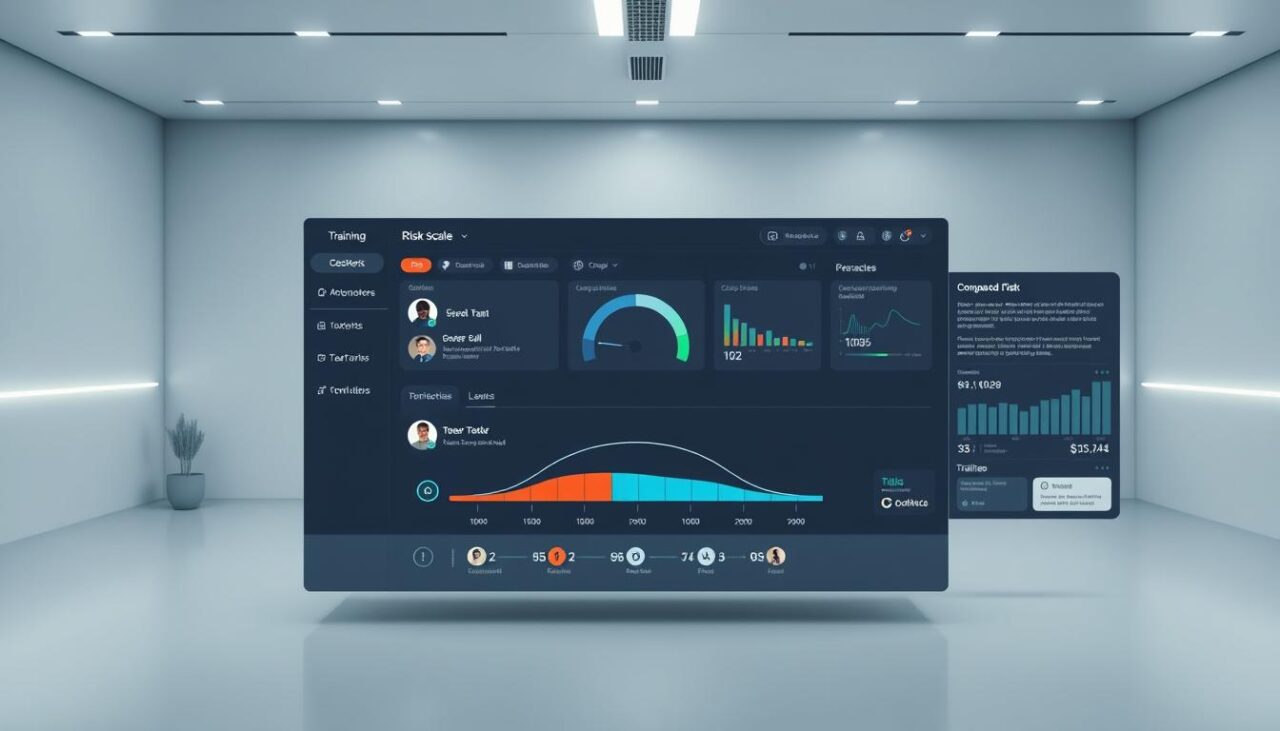
High scale, high risk
Certifications and frequent assessments are essential for safety‑critical features. Require proctored checks and recurring refreshers so users apply protocols consistently.
High scale, low risk
Prioritize on‑demand microlearning, in‑product walkthroughs, and 1:many virtual instructor‑led sessions. These formats boost reach and speed adoption without heavy logistics.
Low scale, high risk
Use live labs, hands‑on exercises, and a rigorous curriculum for specialized users. Practical validation proves both knowledge and execution.
Low scale, low risk
Deliver role‑based learning paths, short courses, and targeted nurture emails. This keeps effort efficient while building capability where it matters.
- Sequence by risk: teach critical steps first, layer advanced topics later.
- Cross‑team reviews: product, support, and compliance must vet content for accuracy.
- Measure progress: track completions and use analytics to surface users who need extra support.
Standardizing onboarding by risk/scale reduces support load, improves consistency, and accelerates product adoption. Keep feedback loops active so the program evolves as features change.
Measuring What Matters: Metrics for a Successful Customer Education Program
Start by tracking a small set of reliable signals that link learning activity to real-world product use. Focus on evidence you can act on: course completion, content engagement, cohort trends, and progression by user segment.
Program metrics
Course completion and content engagement show whether users open and finish learning paths. Track cohort performance by role, region, and maturity to compare outcomes.
Business impact metrics
Product adoption, renewals, expansion, and support ticket deflection connect training to business results. Measure the delta between licenses sold and trained active users to reveal activation gaps.
Executive reporting
Report trends, not only snapshots. Tie metrics to lifecycle stages and corporate KPIs. Mix quantitative dashboards with short qualitative stories that explain why numbers moved.
- Establish baselines and targets, then instrument content to measure lift in adoption and reduced support demand.
- Segment users by role or industry to tailor content and compare program success across cohorts.
- Integrate LMS analytics with CRM and billing systems to enrich insights and strengthen cross-team accountability.
“Analytics that link learning to revenue and retention secure ongoing investment.”
Playbook for Dealers and Support Teams: From Onboarding to Ongoing Success
A clear dealer playbook turns first rides into fast wins by mapping each step a buyer needs during month one. Use a compact 30-day onboarding flow with milestones that prove time-to-value fast.

First 30 days: structured onboarding flows and time-to-value milestones
Start with micro-courses, checklists, and time-bound nudges. Week 1 covers safety checks and basic app setup. Week 2 adds feature walkthroughs. Week 3 uses short assessments. Week 4 bundles next steps and certifications.
In-car and in-app education: contextual tips, micro-courses, and reminders
Meet users at the point of need. Push contextual tips and short in-app lessons so users learn without leaving the platform. Reminders during the first month drive completion and habit formation.
Support deflection: self-service resources that reduce ticket volume
- Resource base: knowledge base, FAQs, and how-to videos that answer common product questions.
- Train the support team to route people to content, improving first-contact resolution.
- Offer live office hours for complex topics and monitor support trends to update content.
Real-World Inspiration: What Successful Customer Education Looks Like
Practical training blueprints from software platforms map directly to automotive use cases like EV charging and ADAS.
Top SaaS academies provide a clear playbook: modular courses, badges, and role paths encourage steady progress and repeat visits. HubSpot’s free courses build trust and feed marketing, while Salesforce Trailhead shows how gamified milestones drive motivation and deeper product topics.
Adapting proven models
Slack and Zendesk offer role-based journeys that align training to actual job tasks. LearnWorlds pairs daily webinars with on-demand content to keep learning active.
Mini vignettes: measurable impact
Real outcomes matter. Wrike saw 102% active user growth and 3x conversions after robust programs. Acoustic reported a 16% CSAT lift from targeted training.
- Platform approach: combine content, credentials, and community.
- Consistent taxonomy: a shared knowledge base helps customers find and apply answers fast.
- Measure what matters: tie completion and assessments to product adoption and in‑product behavior.
“Embed adoption goals into the program so learning directly drives business outcomes.”
Your 2025 Roadmap: Building a Successful Customer Education Program
Build a phased year where quick wins fund broader rollout and analytics shape every next step.
Quarter-by-quarter plan: Q1 pilot core onboarding and measure baseline metrics. Q2 expands content, roles, and LMS setup. Q3 adds certifications, in-product guidance, and dealer enablement. Q4 optimizes via analytics and ROI reporting.
Team, resources, and budget
Staff a small cross-functional team: program owner, instructional designer, content producer, LMS admin, data analyst, and an enablement partner.
Budget for platform, content production, certification, and analytics. Prioritize resources that speed time to value for users and customers.
Operational priorities for success
- Design onboarding sequences with micro-courses, milestones, and assessments to validate knowledge.
- Establish content operations: reviews, localization, and version control tied to product release cycles.
- Create a data plan that links training activity to adoption, retention, and support deflection for business reporting.
Close the loop: use user feedback, cohort analysis, and quarterly business reviews to refine courses and demonstrate program value to leadership.
Conclusion
Start small with a pilot that ties clear outcomes to business metrics and scales from measurable wins. Key benefit, pilots prove how customer education raises adoption, lowers support load, and lifts satisfaction.
The right mix of formats—micro-courses, in‑product tips, videos, and certifications—shortens time to value and improves the owner experience.
Secure executive sponsorship and build cross‑functional teams. Take a step‑by‑step way: launch a pilot, measure outcomes, learn fast, and refine the program.
When aligned to product and marketing goals, education-driven work becomes a growth engine that boosts retention, creates advocates, and delivers lasting business value. Start the first step now and make learning part of the ownership way forward.